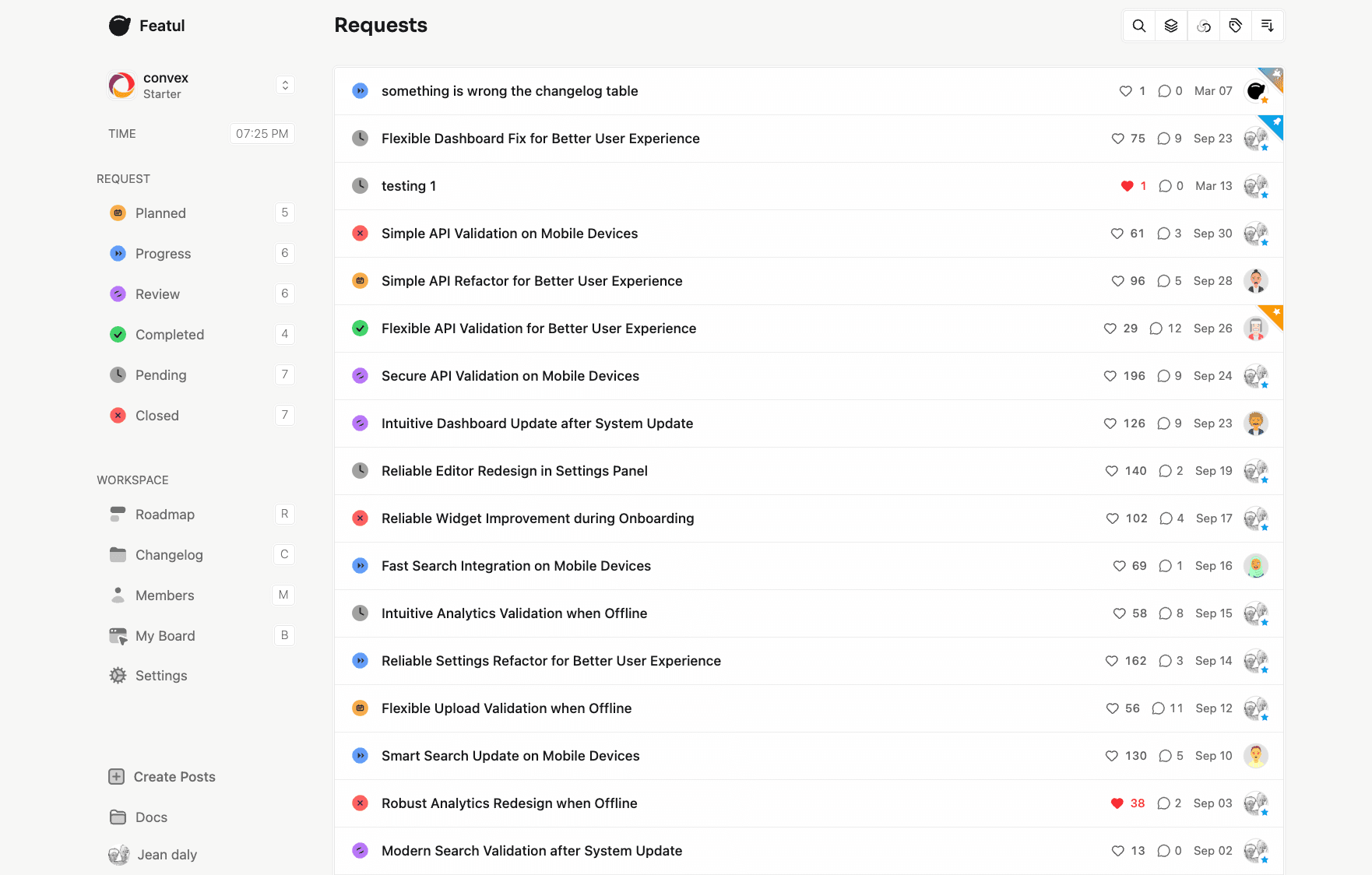
Before Featul vs after Featul
Many teams begin with feedback distributed across multiple fragmented systems: support tickets, ad‑hoc Slack threads, spreadsheets maintained by individual contributors, and informal comments in community spaces. In this environment, it becomes difficult to understand which requests are most common, which customers are affected, and how feedback should influence the roadmap.
With Featul, feedback, roadmap, and changelog are managed together within a single workspace. Product teams gain a consolidated view of demand, can clearly explain why certain initiatives are prioritized, and can demonstrate both internally and externally how customer input directly shapes product decisions.
1. Capture feedback from every channel
Start by ensuring that all relevant channels feed into a single, consistent destination. With Featul, you can bring feedback from in‑app widgets, email, support tools, and community spaces into a central feedback hub instead of allowing each channel to develop its own separate backlog.
Once feedback is centralized, your team no longer needs to reconcile separate spreadsheets or search through historical tickets to understand customer needs. Everyone works from the same structured view, with the ability to filter by segment, product area, or importance, which leads to more deliberate and accountable decision‑making.
2. Prioritize with a transparent roadmap
When feedback is grouped into clear themes, it becomes easier to assess impact and urgency. Featul enables teams to consolidate related requests into structured ideas, estimate the value and effort involved, and then convert those ideas into roadmap items that can be tracked over time.
A public or shared roadmap gives all stakeholders customers, customer success, sales, and leadership a single reference point for what is planned, in progress, and recently delivered. This reduces ad‑hoc status requests, supports more transparent expectation‑setting, and helps internal teams speak with a consistent, aligned message.
3. Close the loop with changelogs
When a feature ships, the work is not finished until customers clearly understand what has changed and how it relates to their earlier requests. With Featul, you can link releases back to their originating feedback, record the status change, and notify the customers and internal teams that were following a given item.
Over time, this consistent “closed loop” communication builds trust. Customers begin to see that submitting feedback has a real effect, which increases engagement and turns previously silent users into active collaborators in your product development process.
Example scenario
Consider a B2B SaaS team that repeatedly hears requests for more advanced analytics capabilities. Some requests are raised by enterprise accounts through their customer success managers, while others surface from smaller customers via an in‑app feedback widget and periodic NPS surveys.
Using Featul, the team groups all analytics‑related feedback into a single idea, attaches internal notes, and records how much ARR sits behind the request so a flagship account is not ranked like a free-tier upvote. Once the work is prioritized, the idea is moved to “Planned” on the roadmap. Customers can subscribe to updates, and when the new analytics release ships, they automatically receive a clear changelog entry that explains what was delivered and why.
Who this use case is for
This workflow is particularly well‑suited to SaaS teams that want a structured, privacy‑first way to manage feedback at scale while still maintaining a clear, human connection with their customers. It works especially well for organizations that are moving from informal processes to a more deliberate, product‑led operating model.
- Replace scattered feedback documents and spreadsheets with a single, auditable source of truth
- Align product, success, sales, and leadership around one shared roadmap and prioritization model
- Reduce manual status updates and follow‑ups while still providing timely, professional communication
- Demonstrate a clear, EU‑hosted, GDPR‑friendly feedback process to security‑conscious customers
Get started with Featul
If you are ready to centralize product feedback and make roadmap decisions with greater confidence, a practical first step is to create your initial board, define a small number of clear categories, and invite the core members of your product, success, and support teams. From there, you can gradually connect additional feedback channels and formalize how ideas move from intake to delivery.